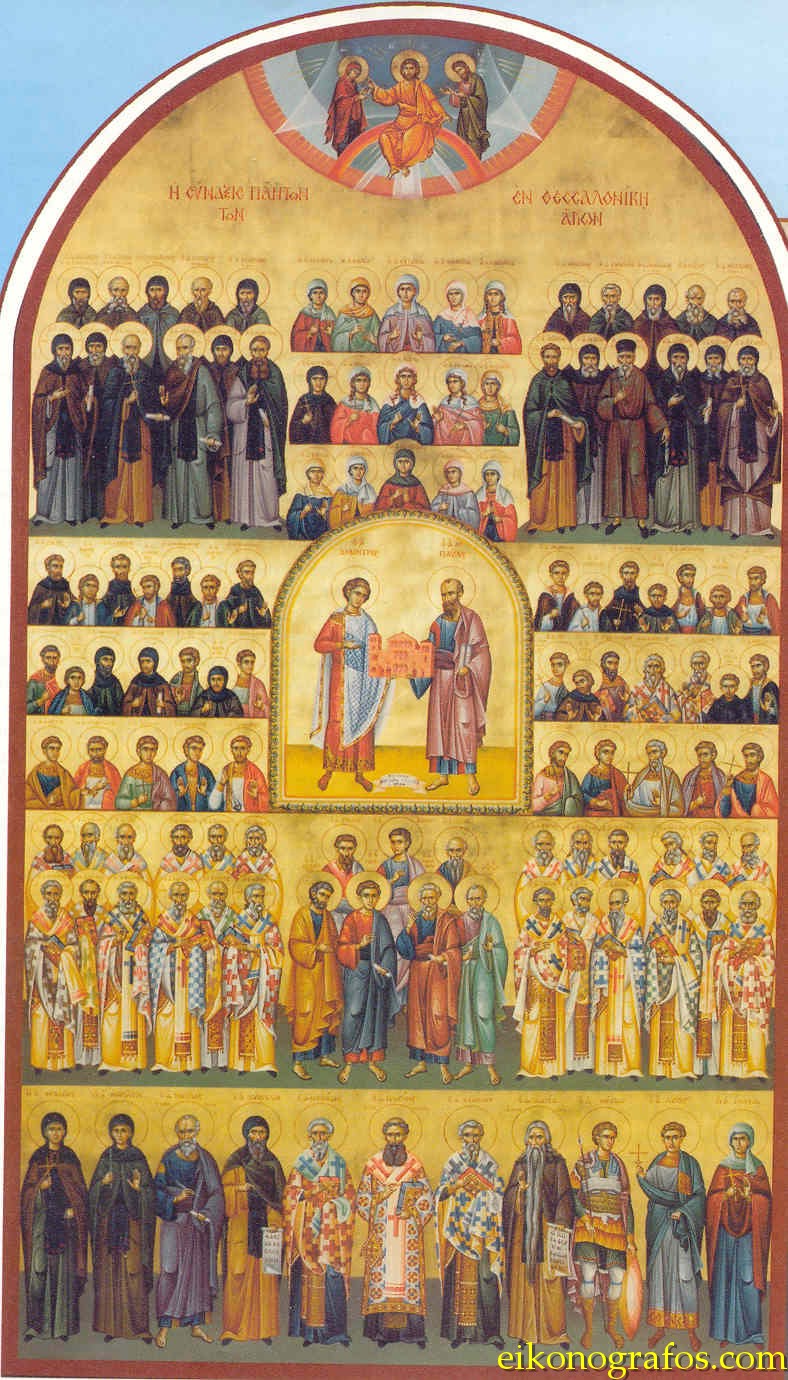
Hier einiges über den Heiligen Nikolaos Cavasilas, einen Heiligen aus Thessaloniki, der aller Wahrscheinlichkeit nach ein Laie war. Allerdings konnte ich keinen Text auf Deutsch finden. Vielleicht steht schon etwas über ihn im Forum, ich habe keinen Überblick.
Ich übersetze so gut ich kann:
Der Heilige stellt die Frage: Empfangen auch die Toten die Heilige Kommunion?
Und er gibt die Antwort dazu: Ja, von den Händen Christi. Und in Wirklichkeit profitieren sie dadurch mehr als wir, denn wir Lebenden begehen Sünden auch nachdem wir die Heilige Kommunion empfangen haben. Die Entschlafenen aber haben keine Gelegenheit mehr dazu, so hilft ihnen die Kummunion jedesmal besser zu werden oder sie bekommen sogar die endgültige Verzeihung. Und so befinden sie sich in einem besseren Status, um in Kommunion mit dem Retter zu treten, nicht nur was die Lebenden betrifft, sondern auch sich selbst, wenn sie noch am Leben wären. (Ἑρμηνεία τῆς θείας Λειτουργίας - The Exposition of the Divine Liturgy, S. 140):
Ist das nicht sehr schön und tröstlich?
From OrthodoxWiki
Our father among the saints Nicholas Cabasilas (born 1319/23 in Thessaloniki and died sometime after 1391) was a well known theological writer and mystic of the Orthodox Church. He was born in Thessaloniki and, as a young man, was involved in politics. Little is known of his later life, however, he is remembered for his two treatises, Life in Christ and The Exposition of the Divine Liturgy. These volumes are generally regarded as classics of Eastern sacramental theology.
He was on intimate terms with the emperor John VI Cantacuzenos, whom he accompanied in his retirement to a monastery. In 1355 he succeeded his uncle Nilus Cabasilas, like himself a determined opponent of the union of the Greek and Latin churches, as archbishop of Thessaloniki. In the Hesychast controversy he took the side of the monks of Mount Athos and Saint Gregory Palamas. He is commemorated by the Church on June 20.
http://www.echo-orthodoxe.net/share/con ... -gr-ru.pdf
Nicholas Cabasilas and the Divine Liturgy
The intense spiritual life of Nicholas Cabasilas radiates from his two literary masterpieces, Life in Christ, a masterful synthesis of Christian living, and the Commentary on the Divine Liturgy, Cabasilas’ invitation to an ever-deepening participation in the Eucharistic mystery. The life and work of this exceptional fi gure will lead us into an exploration of the Divine Liturgy (Eucharistic Liturgy) from the fourteenth century, Cabasilas’ era, up to the present day. What does the Orthodox liturgy offer believers today if not a hopefilled vision of the world and of history?
http://www.allsaints-stl.org/20051211MortonSermon.shtml
St. Nicholas Cavasilas says, “Those whom the priest calls holy are not only those who have obtained perfection, but also those who are striving for it without having yet obtained it.”